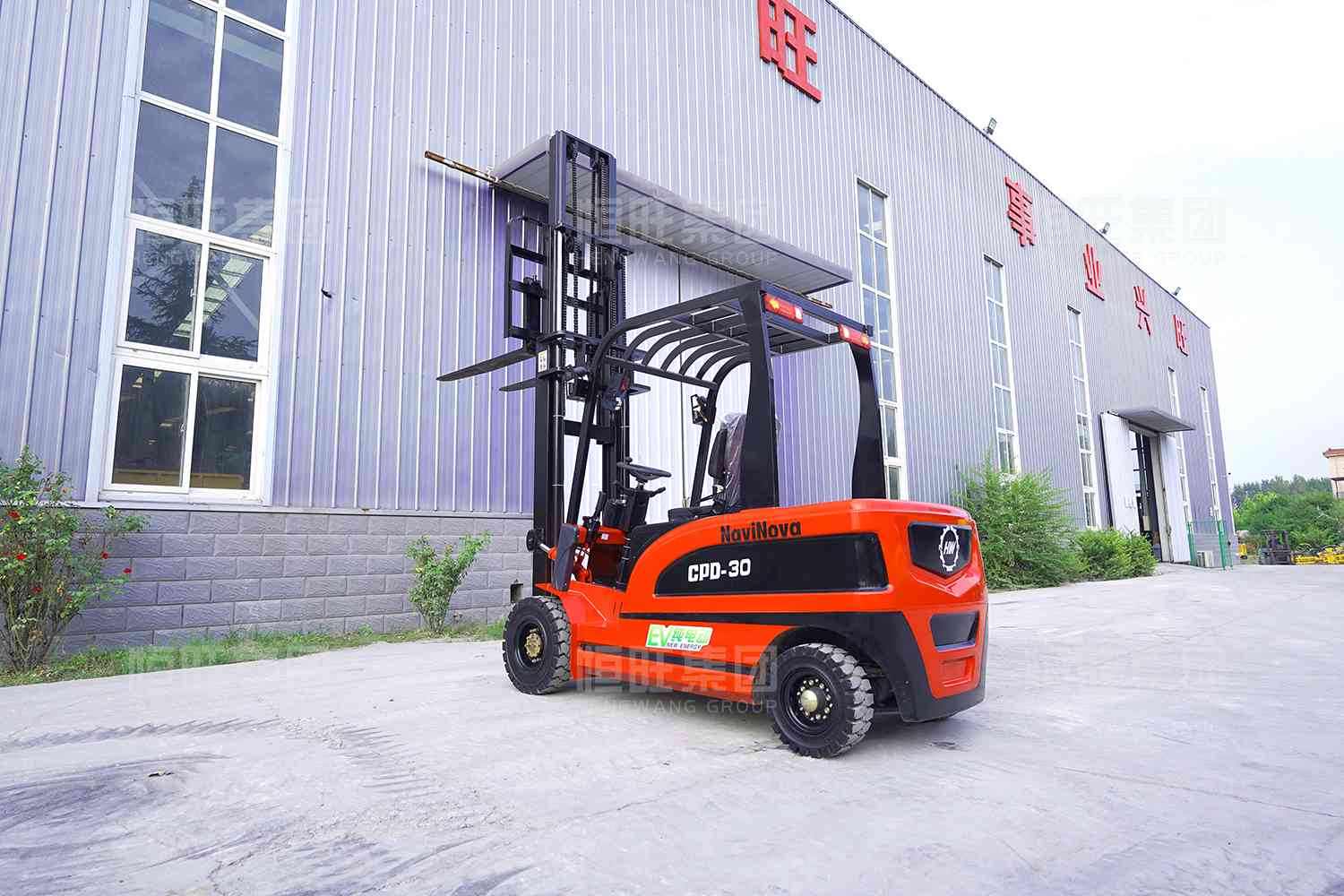
1. Forklift Appearance Cleaning Check
Before daily operation, visually assess the forklift's surface cleanliness, focusing on removing dust and debris from the body, forks, and tires. A clean forklift not only helps detect potential cracks promptly but also prevents component corrosion from dirt accumulation.
2. Charging System Status Inspection
When connecting the forklift charger, visually check if the charging indicator light flashes normally. If the light remains off or shows a constant red light, inspect the charger cable connections immediately to avoid battery life issues.
3. Forklift Lighting System Patrol
Before starting the forklift, turn on the headlights, turn signals, and warning lights one by one. Ensure all lights illuminate properly—functional lighting is crucial for safety in busy worksites.
4. Sound Warning Device Test
Press the forklift horn during the test run to confirm clear and loud alerts. In warehouse or workshop areas, a reliable horn is key to preventing human-machine collisions.
5. Instrument Display System Check
Visually inspect the forklift dashboard and indicators, ensuring normal readings on the battery gauge, speedometer, etc., with no cracked or blacked-out screens. Monitoring instruments helps detect battery depletion or system faults early.
6. Forklift Tire & Brake Inspection
7. Battery Electrolyte Level Confirmation
Open the battery cover to check if the electrolyte level stays above 3/4 of the battery height. Add distilled water (never tap water) when low to maintain stable charging performance.
Forklift Inspection Mnemonic
"1st check appearance, 2nd inspect lights,
3rd test horn, 4th examine screen;
Tires and brakes non-negotiable,
Battery level must be seen—
7 daily steps keep forklift issues clean!"